
By Stephanie Winter, DNP, FNP-C, ENP-C, PMHNP-BC — board-certified psychiatric nurse practitioner and owner, Anchor Psychiatric Group.
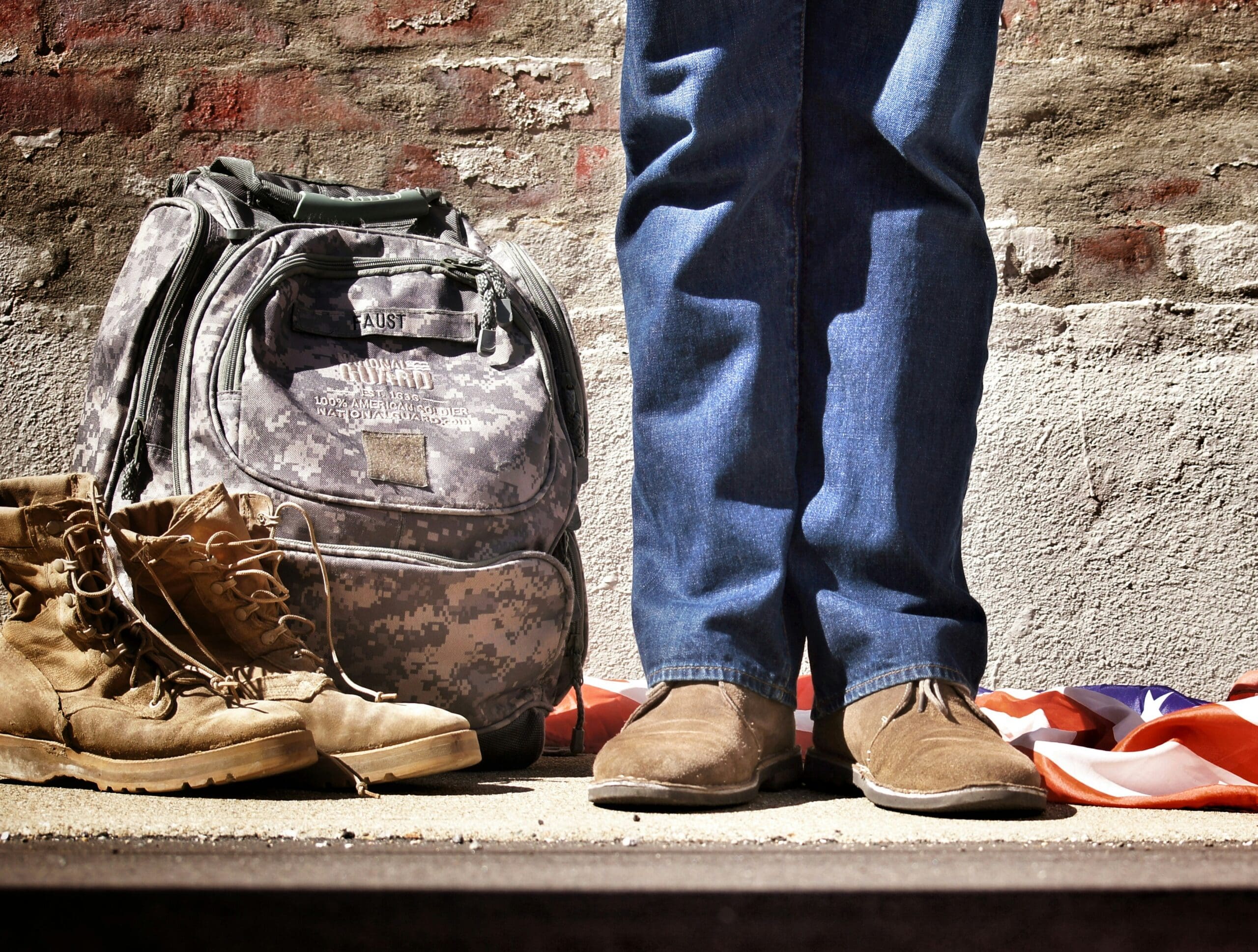
Nobody hands you an operations order for civilian life. You spend years, sometimes decades, inside a structure that tells you exactly what right looks like… and then one day that structure is gone, and you’re expected to just figure it out. Most veterans do. A significant number struggle with it more than they expected to, and more than the people around them realize.
This isn’t a small problem, or a rare one
Research on military-to-civilian reintegration consistently finds that the difficulty is the rule, not the exception. Even accounting for the full range of transition experiences: voluntary versus involuntary separation, honorable versus less-than-honorable discharge, retirement after a full career versus a single enlistment (roughly three-quarters of veterans report real difficulty adjusting to civilian life), and that difficulty is directly linked to the elevated veteran suicide rate [1]. This isn’t a sign that someone did the transition wrong. It’s a sign that the transition itself is hard, structurally, for almost everyone who goes through it.
Melissa Morales, FNP-BC, ENP-C: 25 years in the United States Air Force
One of our providers, Melissa Morales, spent 25 years in the United States Air Force and retired as a Chief Master Sergeant, the highest enlisted rank in the Air Force, after multiple deployments. She has lived the version of this transition that’s specific to senior enlisted leadership: walking away from a rank that carried real authority, a chain of command that depended on her judgment daily, and an identity built over two and a half decades of service, into a civilian world that doesn’t automatically recognize any of that. She brings that lived understanding into every visit with a service member or veteran, alongside her clinical training as a nurse practitioner. For a lot of veterans, being evaluated by someone who has actually wondered who am I now without the uniform changes the entire conversation.
PTSD doesn’t always look the way people expect
Post-traumatic stress disorder is the condition most associated with military service, and for good reason. Deployment, combat exposure, and repeated exposure to trauma are well-established risk factors. But PTSD in veterans doesn’t always present as flashbacks and hypervigilance. A 2024 systematic review found that complex PTSD (a related but distinct presentation involving disturbances in emotional regulation, self-concept, and relationships, on top of the classic PTSD symptoms) may actually be more common than standard PTSD in serving and ex-serving military populations, particularly among those with multiple or prolonged deployments [2]. That distinction matters clinically: complex PTSD often needs a different treatment approach than textbook PTSD, and it’s frequently missed when a provider isn’t specifically screening for it.
Identity loss is real, and it’s rarely named
Ask most veterans what’s hardest about civilian life and PTSD isn’t always the first answer. Loss of identity, loss of the built-in camaraderie and purpose of a unit, and disorientation around rank, structure, and clear standards of performance are consistently cited as compounding factors in reintegration difficulty, separate from and in addition to any diagnosable mental health condition [3]. This hits especially hard for senior enlisted members and officers who spent years being the person others depended on. Waking up as “just another civilian” after being the one who set the standard for a unit is its own kind of loss, and it deserves to be treated as one, not dismissed as something you should simply get over.
What else shows up: the pattern we see clinically
Alongside PTSD and identity disruption, we routinely see a cluster of related issues in veteran patients: depression and anxiety that surface once the structure of service is gone and there’s finally time to feel what got postponed during active duty; sleep disruption, often tied to years of shift work, deployment schedules, or hypervigilance; strain on marriages and family relationships that had to adapt to deployments and are now adapting again to someone being home full-time; and alcohol or substance use that started as a coping tool and became its own problem. None of these show up in isolation, and treating one without asking about the others tends to miss the actual picture.
Why telehealth fits how veterans actually live
Military life rarely stays in one place, and neither does the aftermath of it. Veterans and their families relocate frequently, and here in Alaska, a substantial share of our population has ties to Eielson Air Force Base, Joint Base Elmendorf-Richardson, or Fort Wainwright. A 2025 review of the evidence for telehealth mental health care in military and veteran populations found strong, consistent support for synchronous video-based therapy in treating PTSD, depression, and insomnia in this group specifically [4]. Telehealth also sidesteps a real barrier: for a population trained to project competence and handle things alone, walking into an unfamiliar clinic waiting room is its own obstacle. A secure video visit from home removes that first hurdle entirely.
How we approach veteran care at Anchor
We evaluate for PTSD and complex PTSD specifically, not just a general trauma checklist. We ask about identity and purpose, not only symptoms. We take alcohol and substance use seriously without treating it as a moral failing. And with Melissa on our team, veterans get a provider who has actually stood in formation, actually deployed, and actually gone through her own version of this transition, not someone applying a textbook understanding of military culture from the outside. If you served, or you love someone who did, and the adjustment to civilian life has been harder than anyone expected, that’s exactly the conversation we’re here to have.
References
- Reid T, Sims KM. (Dis)honorably discharged: identifying policy gaps in military-civilian reintegration. Health Affairs Scholar. 2024;2(2):qxae021.
- Grinsill R, Kolandaisamy M, Kerr K, Varker T, Khoo A. Prevalence of complex post-traumatic stress disorder in serving military and veteran populations: a systematic review. Trauma, Violence, & Abuse. 2024;25(4):3377-3387.
- Alichniewicz KK, Hampton S, Romaniuk M, Bennett D, Guindalini C. Use of Go-Beyond as a self-directed internet-based program supporting veterans’ transition to civilian life: preliminary usability study. JMIR Formative Research. 2025;9:e60868.
- Greene EA, Serpico EJ, Legault GL, Williams SG. Staying relevant in the digital age: exploring the evolving frontier of telehealth for mental health in the Military Health System and Veterans Health Administration. Current Psychiatry Reports. 2025;28(8).
This article is for education and is not medical advice or a substitute for evaluation by a qualified clinician. If you are in crisis or thinking about harming yourself, call or text 988 to reach the Suicide & Crisis Lifeline, available 24/7. Veterans in crisis can also call 988 and press 1, or text 838255, to reach the Veterans Crisis Line.